Every layer must be designed to scale
.jpg)
Speaking at Finnish Quantum Days in Jyväskylä, Nobel laureate John Martinis described the current stage of quantum computing as comparable to the 1960s in classical computing: over the next 5–10 years, simply increasing the number of qubits will not solve the scalability challenge. What lies ahead is a fundamental rethink of the entire quantum computer architecture. Every layer of the system must be designed to scale.
According to Martinis, no single company will be able to solve all the scalability challenges of the next 5–10 years on its own. Scalable quantum computers will depend on collaboration between companies with specialized expertise and on industrial supply chains capable of supporting that scale.
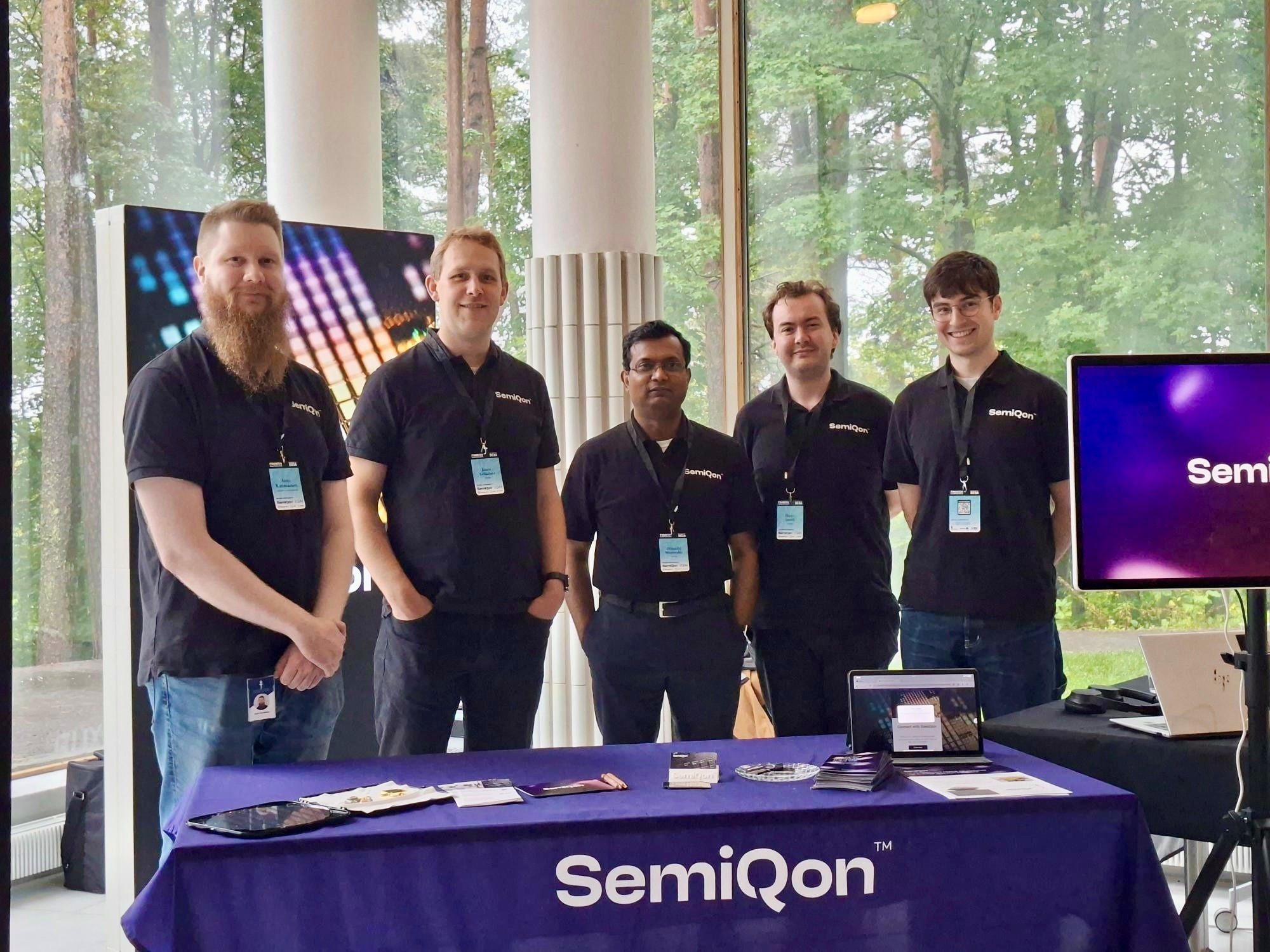
“The inherent inertia of large companies makes it difficult for them to change direction. This transformation will not happen within a single company. Collaboration is even built into our company name: Qolab”, Martinis when visiting SemiQon's exhibition booth after his keynote.
Higher-quality qubits are the first step. The next challenges are control and readout electronics, cabling, integration, and manufacturability.
This is where semiconductor technology is becoming increasingly important.
As qubit counts grow from hundreds to thousands and eventually millions, the current approach of routing control signals from room temperature to the quantum processor simply will not scale.
Cryogenic electronics and semiconductor expertise will play a critical role.
“We are developing a scalable quantum processor, but we collaborate wherever a partner can complement our expertise. For example, SemiQon’s Cryo-CMOS is very interesting new technology from the perspective of our approach”, Martinis added.
The next generation of quantum computers will not be determined by a single component or built within a single company. What matters is how effectively different technologies, areas of expertise, and layers of the system can be made to scale together.