What is cryo-CMOS? Our CTO explains
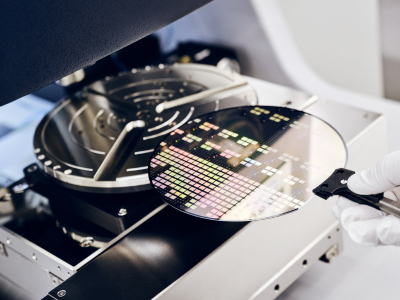
At its core, what we build here at SemiQon is our cryo-optimized CMOS technology. We know it's not the most intuitive topic, so we let our CTO and co-founder, Janne Lehtinen, summarize the key questions we hear most often, from what cryo-CMOS actually means to how it compares to other solutions on the market.
What is cryo-CMOS?
Most electronics we use every day, from phones to data centers, are built on a technology called CMOS (complementary metal-oxide semiconductor). It is the standard way chips and transistors have been manufactured for decades.
Cryo-CMOS takes this same proven technology and redesigns it from the ground up to work in extremely low temperatures (known as cryogenic environments), typically at temperatures close to absolute zero.
This matters because systems like quantum computers need to operate at these temperatures, but the standard electronics used to control them were never designed for such conditions and waste too much power and generate too much heat when cooled down. SemiQon's cryo-CMOS solves this with dramatically lower power consumption and heat dissipation, designed specifically for cryogenic environments.
Why can't regular CMOS electronics be used at cryogenic temperatures?
Standard CMOS transistors were designed to operate at room temperature. When cooled to cryogenic conditions, they suffer from performance degradation including threshold voltage shifts, carrier freeze-out effects, and unpredictable behavior. They still technically function, but they underperform chronically, consuming far more power and generating far more heat than the cryogenic environment can tolerate at scale.
How does SemiQon's cryo-optimized CMOS electronics compare to traditional transistors and other cryo-CMOS solutions?
Compared to conventional room-temperature transistors used in cryogenic environments, our cryo-CMOS transistors consume 0.1% of the power and dissipate 1,000× less heat. Unlike standard transistors that are simply cooled down and left to underperform, ours are built for cryogenic operation using a custom fully depleted silicon-on-insulator (FDSOI) process.
Our transistors achieve a minimum subthreshold swing of 0.32 mV/dec and a 203x subthreshold gain increase from room temperature to cryogenic operation, resulting in significantly lower power consumption and heat dissipation compared to other cryo-CMOS solutions. Our cryo-CMOS is fully compatible with standard CMOS processes, and with in-house design and fabrication, we maintain rapid development cycles and strong quality control.
Is SemiQon's cryo-CMOS technology compatible with different qubit types?
Yes. Our cryo-optimized CMOS electronics are designed as a modality-agnostic platform compatible with all major qubit technologies, including superconducting qubits, semiconductor spin qubits, photonic qubits, and trapped-ion architectures that require cryogenic interfaces.
Why does qubit modality compatibility matter?
The quantum industry has not converged on a single qubit technology. By building control and readout electronics that work across modalities, we allow research groups and quantum hardware companies to adopt our cryo-CMOS platform without redesigning their control stack, regardless of which qubit type they use.
Is cryo-CMOS only useful for quantum computing?
Any application that requires reliable, power-efficient electronics at extreme cold temperatures can benefit from our cryo-CMOS electronics. Space systems such as deep-space telescopes and planetary exploration hardware face similar cryogenic constraints, and high-performance computing architectures are exploring low-temperature operation for greater density and efficiency. We are currently exploring the space applications for our cryo-CMOS technology with support from the European Space Agency.
How are SemiQon's cryo-CMOS electronics manufactured?
Our cryo-CMOS electronics are manufactured using standard semiconductor materials, tools, and fabrication methods. We operate out of Micronova, an advanced nano- and microtechnology facility in Espoo, Finland, with access to a pilot-line fab that enables fast design-fabrication cycles every few months. Within the coming years, we will relocate to Kvanttinova which is to be constructed in Otaniemi, Espoo. Compared to its predecessor Micronova, Kvanttinova will offer three times the manufacturing capacity.
What temperatures does cryo-CMOS operate at?
Our cryo-CMOS transistors are engineered to perform optimally across a wide range, from the millikelvin regime up to 100 K. In our published research (Millikelvin Si-MOSFETs for Quantum Electronics), we characterized transistor performance at both 4.2 K and 420 mK, achieving a subthreshold swing of 0.32 mV/dec at the lower temperature. This means our electronics can serve both the higher-temperature stages of a dilution refrigerator, where control logic and signal chain components typically operate, and the sub-1 K stages closest to the qubits themselves.
Can I buy cryo-CMOS electronics from SemiQon today?
Yes. In 2025, we launched our first commercially available cryo-CMOS solutions, and in early 2026 we shipped our first commercial customer order. Leave your contact details through the form here to book a session with our team.
Qurious to learn more? Leave a contact request to book a session with our team, or explore our cryo-optimized CMOS technology in more detail here.